
logoRezime
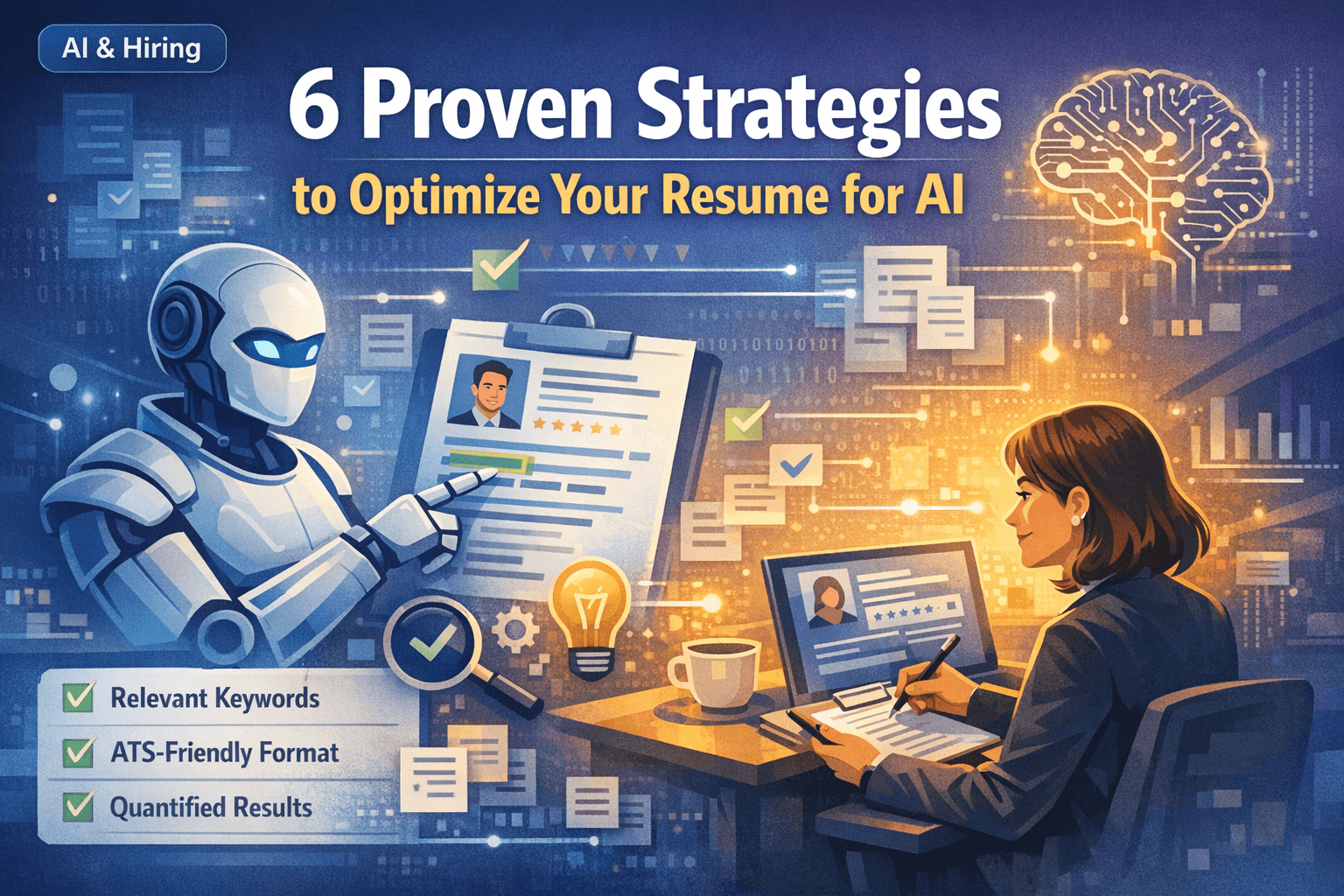
6 Proven Strategies to Optimize Your Resume for AI

6 Proven Strategies to Optimize Your Resume for AI

AI analyzes resumes for relevance, skills, experience and even tone — here’s how to work with AI without losing the human touch.

Larbi Sahli
Career Writer
Published
Published:
Summarize
ChatGPTGeminiPerplexity

AI‑driven hiring tools now analyze resumes for context, relevance, skills, and even tone — going far beyond traditional ATS keyword matching.

Companies like Amazon, Google, and many fast‑growing SaaS firms leverage AI systems such as HireVue, LinkedIn Recruiter, and other machine learning‑based tools to assess applicants before human review.

Your resume isn’t just *read* — it’s *scored* on factors that range from semantic relevance to predictive indicators of success. The goal isn’t to ‘game’ these systems, but to make your resume work intelligently across both automated and human review.

There’s a difference between traditional Applicant Tracking Systems (ATS) and AI‑enabled resume screening. Understanding this helps you tailor your content for *both*.

Recruiters still rely on ATS to collect, store, and filter resumes. But modern AI scanners layer on natural language processing (NLP) and machine learning to evaluate context, relevance, and even predicted success.

Keywords remain foundational, but modern AI scanners go beyond simple matching. They look at context — how you *used* a skill — not just whether you listed it.

The first step in AI optimization is identifying the keywords that matter *most* for the role and integrating them naturally into your resume.

Format impacts both AI parsing and human readability. Recruiters prefer structured, predictable content, especially for high‑volume roles.

The **reverse‑chronological format** is ideal because it presents your most recent experience first, highlighting career progression in a way AI and humans readily interpret.

Even the best content won’t matter if AI can’t read it accurately. Structuring your resume with clear, standard sections enables both ATS and AI systems to categorize and weigh your experience correctly.

Resume design should balance AI compatibility with visual appeal to human reviewers. The goal is to *enhance readability* without obscuring content.

AI hiring tools analyze the *quality* of your language, not just keyword presence. This includes how you describe accomplishments, tool usage, and soft skills.

Even optimized resumes can fail AI parsing if they contain formatting issues, hidden characters, or the wrong file type. These final checks ensure your application is AI‑ready and recruiter‑friendly.

AI screening tools can feel opaque, but understanding how they work empowers you to optimize your resume effectively.

AI is reshaping how resumes are evaluated, but **human hiring managers still make the final call**. The best resumes are optimized for both AI parsing and human engagement.

Tools like modern resume builders help you meet AI requirements while preserving your voice, narrative, and personality — what ultimately convinces recruiters to invite you to interview.

Continue Reading

More guides to help you get hired

Check out more Rezime articles on resumes, cover letters, and job search strategy picked for you.